
How to travel
Self-drive vs fly-in safari in Namibia
How you move through Namibia shapes the whole trip. Here is an honest comparison to help you choose — or combine.
Namora journal · 27 July 2026
One of the first real decisions in planning a Namibia trip is how you’ll move through it: behind the wheel, or above the roads. Both are excellent. The right answer depends on your time, your budget and how you feel about long gravel drives.
Self-drive: freedom and time
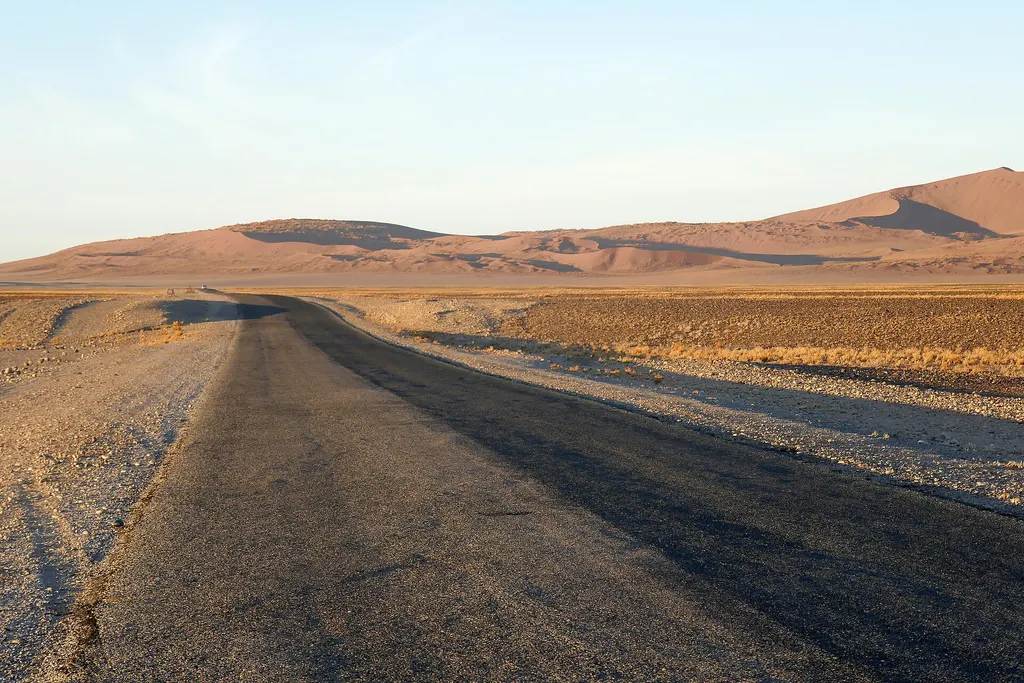
Namibia is one of the world’s great self-drive destinations — well-signed, sparsely trafficked, and endlessly scenic. With a capable 4x4 you set your own rhythm and stop wherever the light is. The trade-off is time and distance: expect four-to-six-hour drives between regions, much of it on gravel, and a real share of each day spent moving. It suits independent travellers with time to spare and an appetite for the road itself.
Fly-in: reach and ease
Light aircraft turn Namibia’s greatest weakness — distance — into a highlight. A transfer that costs half a day by road becomes a spectacular thirty-minute flight over dunes and coastline, and fly-in camps open up remote corners of the Skeleton Coast, Kaokoland and private concessions that are impractical to reach otherwise. It suits travellers with less time or a preference for comfort and rare access, at a higher cost per day.
Or both
Many of our favourite journeys blend the two: self-drive or guided where the roads are the experience, and a flight or two to leap the long, empty transfers and reach places the roads don’t. The point isn’t to pick a side — it’s to spend your days on what you came for.
Shaped to you
Tell us your timeframe and how you like to travel, and we’ll propose the balance of road and air that gets the most out of your days in Namibia.
Ready when you are